Thursday, April 20, 2023

Week 15 Prompt - Marketing the library's fiction collection

 At the library where I work the Community Outreach Manager is in charge of most of the marketing, so I don't do a lot of marketing per se. As part of the circulation department I do put up displays of varying themes through out the year. For example, In March I had one display titled "March Into a Good Book", one titled, "Be Pinch Proof and Checkout a Green Book", and in large print I put up a display that read "Get Lucky! Find a good book!" I put out new books/DVDs/audio-books when displayed material gets checked out and try to rotate in new material when material has been on display for awhile. We also have an ongoing display of books that are popular on Booktok that I often refill as books get checked-out.

Some of the ways our library promotes our fiction collection that I'm not involved in include Facebook/Instagram posts, a blog, a podcast called The Bookmark, book bags for adults, teens & kids, winter and summer reading programs, readers advisory form on-line and in print, and book club to name a few. I work in adult services so I'm going to focus on a few things we do in that area.

Adult book bags:

Our information services librarian curates the adult book bags. It begins with a patron filling out the readers' advisory form so she can pick out books tailored to their tastes. She will also ascertain how many books they want at a time and how often they want them. When she chooses the books they go in one our plastic bags with the their name written in sharpie. She will call the patron to let them know the bag is ready for pick up and whoever is working the circ desk will give them to the patrons when they come in.

Reading programs:

Our community outreach manager organizes two big reading programs every year, summer & winter. We recently started using the app Beanstack to facilitate these programs. Patrons can earn badges on the app by completing certain tasks and/or amount of time spent reading. We also have prizes the patrons can win when they meet certain bench marks.

Staff Recommendations:

People seem to inherently trust library staff for good book recommendations even part-time staff. So we try to incorporate staff  recs as much as possible. They are incorporated into our displays, with little handouts at the desk, in our social media posts, and of course in the podcast. Our patrons always enjoy seeing our staff recommendations and are often interested in what we are reading. 

How can we do better?

I think one area we could be more diligent in is advertising our new fiction. I think there is a newsletter that goes with new fiction, but beyond that we don't do much. We could post about new items on our social media and/or our website. Something that patrons have asked about is a printout of new fiction that they can take to look through. Perhaps just a "New this month" list that could printed and posted on the website so patrons could see an ongoing list of the newest additions to our collection. Making it easier for patrons to see what's new would only increase our circulation and holds.

Friday, April 14, 2023

Week 14 Prompt - Urban Lit and LGBTQ Lit

Should we have separate sections for Urban Lit & LGBTQ Lit?

Like many of my classmates my knee jerk reaction to this question is no. I will give my reasons with one caveat. I am not part of either of these communities and ultimately I think these communities should be consulted before a final decision is made about or for them by collection development personnel. That being said here are my reasons for saying no:

1) As has been mentioned by many of classmates separating out these collections feels like a kind of segregation. I remember when marriage equality was coming to head seeing many members of LGBTQ community being upset with references to gay marriage. They would say it's not gay marriage it's just marriage that happens to involve two gay persons. We don't call it straight marriage do we? So I have to wonder does this same logic apply to books? We don't call it straight fiction, straight romance, straight sci-fi/fantasy, etc... So is it fair to use LGBTQ romance, LGBTQ sci-fi, LGBTQ horror, etc..to single out these books? This a question that only the LGBTQ community can answer. 

2) Again many of classmates have brought up the issue of safety. I also worry about safety of both the books being singled out and the people browsing them. Along the same lines what about a patron's right to privacy? We have a lot of rules in place to ensure patron privacy regarding both their personal information as well as what they check out. Having all the LGBTQ materials in a separate space seems to fly in the face of privacy rules. If a patron is in that section everyone in the library who sees them their automatically knows what kind of literature they're looking at. As for the books/resources themselves it seems like collecting them all in one place makes that much easier for vandals to target those materials. They can destroy them all with one fell swoop. Kind of like putting all of you eggs in one basket it you will. It would also make it easier for all of the people wanting to ban LGBTQ and anti-racist books. It's like handing them all the books they want to get rid of on a silver platter. We've only had a couple of books questioned so far, but if those books had been in a section surrounded by a bunch of others of same ilk I hate think how many more questioned books we'd have at this point. This might sound crazy, but never underestimate the laziness of the American public.

3) My third reason is that creating separate sections for these two "genres" seems like a slippery slope. When you start separating out sections where does it stop? Are we going to separate out all the "erotica", put it behind a curtain and slap an age limit on it? What about separate sections for western romances, southern romances, city romances, cozy mysteries, who-dun-nit mysteries, dark mysteries? My point is there are soooo many sub-genres so when you start separating books by collections where does it stop?

4) I also agree with others that separating out collections keeps people from expanding their horizons. You can't happen upon a new book, a new genre, a new author if you only stick to on separated out section. Mixing everything together exposes the patrons to so many more options. 

5) I haven't specifically addressed Urban Lit, though I think many of the same principles apply. However, I will let an African American author address this more specifically. Author N.K. Jemison has a post on her blog called "Don't Put My Book in the African American Section." In this post she says "I hate the “African American Fiction” section. HATE. IT. I hate that it exists. I hate that it was ever deemed necessary. I hate why it was deemed necessary, and I don’t agree that it is. I hated it as a reader, long before I ever got published. And now that I’m a writer, I don’t ever want to see my books there — unless a venue has multiple copies and they’re also in the Fantasy or General Fiction section." The author goes on to say "Any bookstore or library which shelves my stuff in AAF has assumed that my work is automatically of interest to black readers — and only black readers — because I’m black. It further assumes that black readers don’t care about the book’s actual content; they’ll just read anything by a black author. Yet further this practice assumes that white readers are too xenophobic to consider reading a book written by someone of another race, so such books shouldn’t even be allowed into their sight." (2010) She has many other salient points about why there shouldn't be separate sections. It's an excellent read that I highly recommend!

I could list more reasons, but I'll leave it there for now. I am not in collection development so none of this my call, but I think it's important the however we choose to arrange and/or display our materials that we are doing our best to live up to the ideals set forth in the ALA Guidelines and Library Bill of Rights. And always always involve those who are going to be impacted the most in our decision making process, whatever that may look like.


References:

Jemisin, NK. “Don't Put My Book in the African American Section.” Nkjemisin.com, NK Jemisin, 26 May 2010, https://nkjemisin.com/2010/05/dont-put-my-book-in-the-african-american-section/.


Tuesday, April 11, 2023

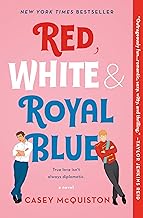
Diverse Authors Annotation: Red, White, & Royal Blue

 Title: Red, White, & Royal Blue

Author: Casey McQuiston                                                                    Red, White & Royal Blue: A Novel

Genre: Diverse Authors, Contemporary Romance, Relationship fiction

Publication Date: May 14, 2019

Number of Pages: 448

Geographical Setting: Washington, DC (United States); London, England

Time Period: 2020

Series (If applicable):

Plot Summary:

*Content Warning: Sexually explicit, strong language, sexual assault*

Alex is the son of the President of the United States (FSOTUS), Mexican American, and sexually confused. HRH Henry Prince of Wales is Alex’s nemesis, but there is a very thin line between hate and love. Alex can‘t stand boring, emotionless, pompous, stuck-up, Prince Henry, so why can’t he stop thinking about him? After Henry plants one on him he finally starts to come to terms with the fact that he is bisexual and he doesn’t hate Henry, not even a little bit. Alex soon learns Henry is not at all what he thought or expected. The two embark on a secret, and very steamy relationship. When his mother’s political rivalry in the 2020 Presidential election outs his and Henry’s relationship to the press all heck breaks loose. Will their relationship be strong enough to survive? Will it be the end of Alex’s mom’s quest for reelection? Can Henry stand up to the Royal family and fight for Alex?

Subject Headings: LGBTQIA--fiction

       Romance—fiction

       Contemporary Romance—fiction

       Comedy—fiction

       Political—fiction

       Royal Family--fiction

Appeal:  

Diverse Author appeals: Casey McQuiston identifies as queer, which fulfills the appeal of diverse author.

Romance appeals:

Characterization: “Romance is a character-driven genre. Novels turn on the relationship between the two central characters.” (Wyatt & Saricks, 2019) Read, White & Royal Blue (RWRB) definitely satisfies this appeal. The story revolves around the relationship of the Alex and Henry, the two most central characters.

Story Line: “The story line in a Romance traces the unfolding courtship of the herioine and hero, their developing relationship, and its happy conclusion.” (Wyatt & Saricks, 2019) Again, RWRB satisfies this appeal of romance. The story follows the development, sometimes to graphic detail, of Alex and Henry’s relationship from beginning to its happy conclusion.

Relationship appeals:

Story Line: “These novels often relate stories of overcoming obstacles, getting second chances, finding one’s self, and starting anew.” (Wyatt & Saricks, 2019) RWRB is very much a story of Alex and Henry finding themselves as well as each other. Alex not only comes to terms with his sexuality, but also rethinks his life’s dream and ultimate goal. Henry, while quite confident is his sexuality, was able to find the strength to come out to his family and face what that meant for his place in the Royal family. Both Henry and Alex’s journey’s come with ample obstacles they have to hurtle, not the least of which is both of them living in the public eye. According to Wyatt and Sarciks, Another hallmark of relationship fiction story lines is drama. (2019) RWRB has drama in spades. From Alex’s drunken stumble resulting in both him and henry knocking the royal wedding cake, to family drama on both sides, to a show down with the Queen herself, this book is nothing if not drama filled!

Pacing: “These are not rocket reads, and the events of the novel tend to unfold leisurely.” (Wyatt & Saricks, 2019) This book definitely seems to have a more leisurely pace than a traditional romance. Due impart, I’m sure, to a lot of internal dialogue from Alex, the story does not seem to be in hurry to reveal itself. At least not until the final chapters after the proverbial “crap” hits the fan. Then it starts feel more like the frantic pace of a more traditional romance.

3 terms that best describe this book: Funny, heartfelt, hopeful

Similar Authors and Works (why are they similar?):

3 Relevant Non-Fiction Works and Authors


Spare by Prince Harry: In all honesty, part of the reason this book came to mind is that it is currently a very popular checkout at my library. It seems relevant because it’s about the Prince of Wales, he also the younger brother and his name starts with H and ends with y. I’m sure these all just coincidences…

Palace Papers by Tina Brown: I chose this book as a relevant read because RWRB has a lot of Royal drama in it. A book about the real-life drama of the Royal family the story is based on seemed a solid choice for a relevant read.

LGBTQ: the survival guide for lesbian, gay, bisexual, transgender, and questioning teens by Kelly Huegel: This book is relevant for multiple reasons. The author is queer, Alex struggles with his sexuality and eventually comes out at Bisexual and Henry is in his own words “gay as a maypole.” (McQuiston, 2019)

3 Relevant Fiction Works and Authors


Boyfriend Material by Alexis J. Hall: This book is a read-a-like on Novelist. Both books are LGBTQIA romantic comedies, with character-driven storylines, witty and engaging writing styles, and steamy tones. They both also feature fake relationships that turns real, and British main characters.

The Charm Offensive by Alison Cuchron: I chose this book as a relevant work because it is also a Novelist read-a-like for Red, White, and Royal Blue. They are both classified as LGBTQIA romantic comedies with a heartwarming tone. They also both have character driven storylines.

Heartstopper by Alice Osemon: I chose this book as a relevant work because it has some similar themes as Red, White, and Royal Blue. They are both LGBTIA romances with British main characters. They also both feature the theme of coming out.  


References:

“Novelist: EBSCO.” Novelist, https://www.ebsco.com/novelist.

Wyatt, N., & Saricks, J. G. (2019). The readers' advisory guide to genre fiction (Third). ALA Editions.